
The Spring Rolls Started in a West Tulsa School Garden |
At Under the Canopy School, third-graders are learning where food comes from by growing and harvesting it. On one recent school day, their work became lunch. |
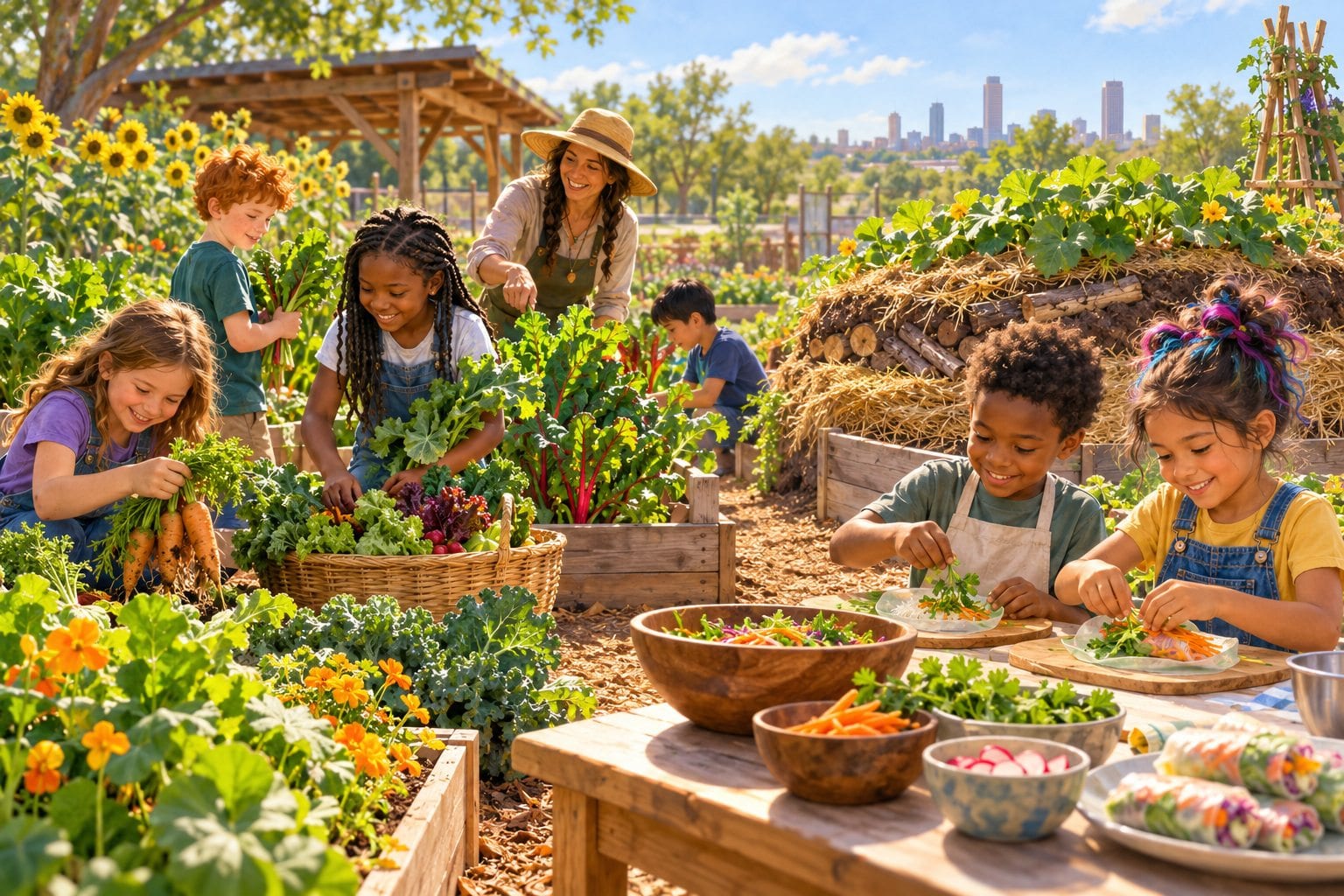
Crazy Hair Day had already given a Wednesday morning at Under the Canopy School a little extra personality. But the third-graders in West Tulsa had another reason to head outside: vegetables were ready to harvest. Later, some of what they picked would become spring rolls for lunch.
In Mike Grogan's October report for KJRH, an instructor the children call Ms. Jazz guides them through the school's Nature Learning Lab. They work around Hügelkultur mounds, growing beds layered with decomposing wood, compost and straw. It's an unfamiliar name for a place where children are learning a very recognizable skill: how to grow food.
The spring rolls weren't the end of a one-day garden visit. Students take part in planting and harvesting throughout the growing process, Grogan reported. The vegetables they gathered that Wednesday went into food they helped prepare, turning something that had been growing outside into part of their lunch. Recipes made with school-grown ingredients can travel home with them, too.
Fallon Smith, speaking to KJRH, described how easily children can become disconnected from growing and harvesting the food they eat. Helping with both, she explained, gives them a different experience of vegetables and something to share with their families. At Under the Canopy, that connection is being made with garden work the children can do themselves.
The school's Nature & Garden curriculum extends well beyond picking ripe produce. It includes caring for tools, preparing beds, weeding and saving seeds. Students learn about plants, animals and the changing seasons through regular time outdoors. There's work to do long before anything is ready for lunch.
And the garden doesn't stop being a classroom when the weather changes. Smith told KJRH that rainy days can become opportunities to look for grub worms and earthworms. Fallen leaves raise questions of their own. The school uses those ordinary changes to help children notice what's happening in the natural world around them.
Those compost-and-wood mounds might not look like the start of lunch at first glance. Yet the children have a chance to follow what happens there over time, including the quieter jobs between planting and harvest. The vegetables have a history they can see, from the garden beds they help maintain to the recipes they prepare.
There's a pleasant contrast in that Wednesday lesson: the morning included Crazy Hair Day, a walk among growing mounds and a harvest that ended up in spring rolls. The children were learning about food while taking part in the work that produced it. What they picked had a very short trip to make before it became lunch.
The spring rolls were one meal. The garden will still be part of the school day when the next crop needs tending—and when it's time to pick again. |
0 Comments
Join the conversation
Be the first to comment
Share your thoughts above.