
The Next Chapter of Cherokee Storytelling Could Take an Unexpected Route Through Hollywood |
Cherokee filmmakers have spent years telling their own stories. A new four-year exchange plans to bring students and filmmakers between Los Angeles and Cherokee Film's studios in Owasso—with Cherokee language and creative leadership at its center. |
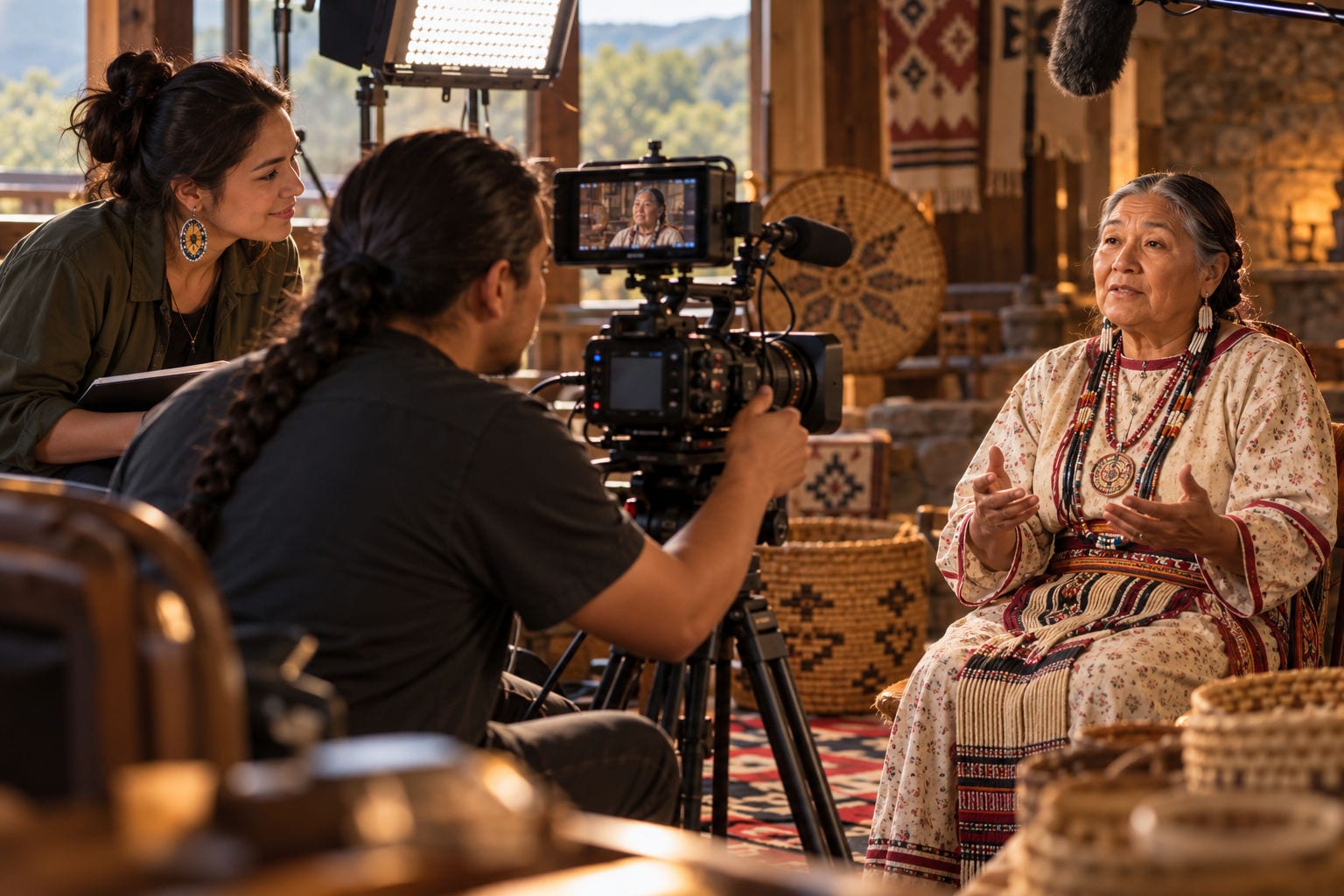
A television script and a woven basket may seem like very different kinds of work. For Cherokee National Treasure Anna Sixkiller, both are part of a life devoted to sharing Cherokee language and traditions. Her story is among those featured by Osiyo, Voices of the Cherokee People, a documentary series made by Cherokee storytellers about their own citizens.
The series began in 2014 after Cherokee Nation citizens wanted their stories shared on a larger stage. It has since grown into something substantial: by September 2026, Cherokee Film reported that Osiyo was in its eleventh season, with more than 330 short documentaries. Its subjects range from language keepers and artists to Cherokee people living far from home. The stories were already being told—and finding viewers—before the latest partnership was announced.
Now Cherokee Nation has opened another route for that work. On October 17, tribal leaders signed an agreement with UCLA's School of Theater, Film and Television. The four-year collaboration is backed by a $470,000 commitment from Cherokee Nation and is intended to support filmmaking education, new Cherokee-language films and educational media. The agreement has been signed; those new productions are still ahead.
The surprising part is that the learning is supposed to travel in both directions. Each year, a group of Cherokee filmmakers and students is expected to go to Los Angeles to learn alongside UCLA faculty and use the school's production resources. UCLA students, in turn, are expected to come to Oklahoma—not just to study Cherokee filmmaking from afar, but to work alongside the professionals already doing it.
Their destination is Cherokee Film Studios in Owasso. These are not proposed facilities waiting to be built for the exchange. The existing studios include two state-certified soundstages, more than 28,000 square feet of production space and advanced virtual-production technology. The partnership's plan puts those Oklahoma resources on the teaching side of the exchange as well as the receiving side.
The collaboration also has a Cherokee filmmaker helping guide it from UCLA. Joseph Erb, a Cherokee Nation citizen and associate professor, has worked in Cherokee-language animation and taught Cherokee and Muscogee students to animate stories. His faculty biography describes a career linking filmmaking, language and technology. Cherokee Nation language and cultural specialists are also expected to guide representation, accuracy and creative development in the partnership's work.
Those details give the agreement a purpose beyond access to expensive equipment. A film made in Cherokee needs more than a camera and a soundstage; it needs people who know the language and whose communities have a say in the way their stories are told. Cherokee Film brings that established work to the table. UCLA brings faculty, students and another set of tools. The university's announcement describes the exchange as a step toward expanded Indigenous filmmaking opportunities, including a possible future Indigenous Media program—not one that already exists.
There are still important chapters unwritten. Neither partner has announced a completed exchange under this new agreement, a finished film from it or a date when the first new production will reach viewers. A four-year commitment creates an opportunity; what emerges from it will need to be seen and heard as the work proceeds.
Meanwhile, the Cherokee stories already on screen offer a place to begin. Anna Sixkiller's work with language and tradition is one of hundreds of examples of Cherokee people speaking through Cherokee-made media. The new question isn't whether their stories deserve a screen. It's what more they may be able to share when the next filmmakers learn from one another—from Owasso to Los Angeles, and back again. |
0 Comments
Join the conversation
Be the first to comment
Share your thoughts above.