
At St. Monica, a Century of North Tulsa History Is About to Bloom |
Before its centennial garden comes a reminder of how this community began: with people looking for a place to worship, learn and belong. |
 |
Before St. Monica Catholic Church had its red-brick home on East Marshall Place, the people behind it had a practical concern: their community wanted a school. The Diocese of Tulsa's history remembers that request as central to the beginnings of a parish that is preparing to celebrate 100 years in north Tulsa.
It was the 1920s. Black families in Tulsa were rebuilding lives and neighborhoods after the devastation of the 1921 Tulsa Race Massacre. Catholic newcomers from Louisiana, drawn to Oklahoma by work in the oil fields and other industries, were among those seeking a place for their religious traditions. Segregation shaped which institutions were available to them. The need for a church and school was not simply an architectural question; it was about who could gather, worship and receive an education.
In 1925, two priests from Holy Family Cathedral, James McNamee and James Rooney, began visiting north Tulsa. According to St. Monica's own parish history, Rooney met with 25 Catholics at the Holy Family rectory on February 28, 1926. A mission society took shape. Members visited homes and began religious instruction, while Mass was celebrated in different Greenwood buildings.
The emerging parish was initially associated with the name St. Pius V before becoming St. Monica. Its beginnings did not depend on a finished sanctuary. They depended on a community willing to make a place for one another while the permanent buildings remained ahead.
The church that Tulsans know today came later, during the 1930s, at 633 East Marshall Place. The parish's account describes a brick Gothic-style sanctuary with stained-glass windows, marble altars and a tower once marked by a blue neon cross. It also credits parishioners with much of the building work. The parish and diocesan timelines disagree on the formal dedication year, so that detail remains open for reconciliation rather than being presented here as settled fact.
The property continued to change as the community changed. A recreation hall was finished in 1941, and school and convent buildings followed during the next several years. The school eventually closed in 1966. The dates trace more than construction and closure; they show how the people of St. Monica repeatedly responded to the circumstances of their time.
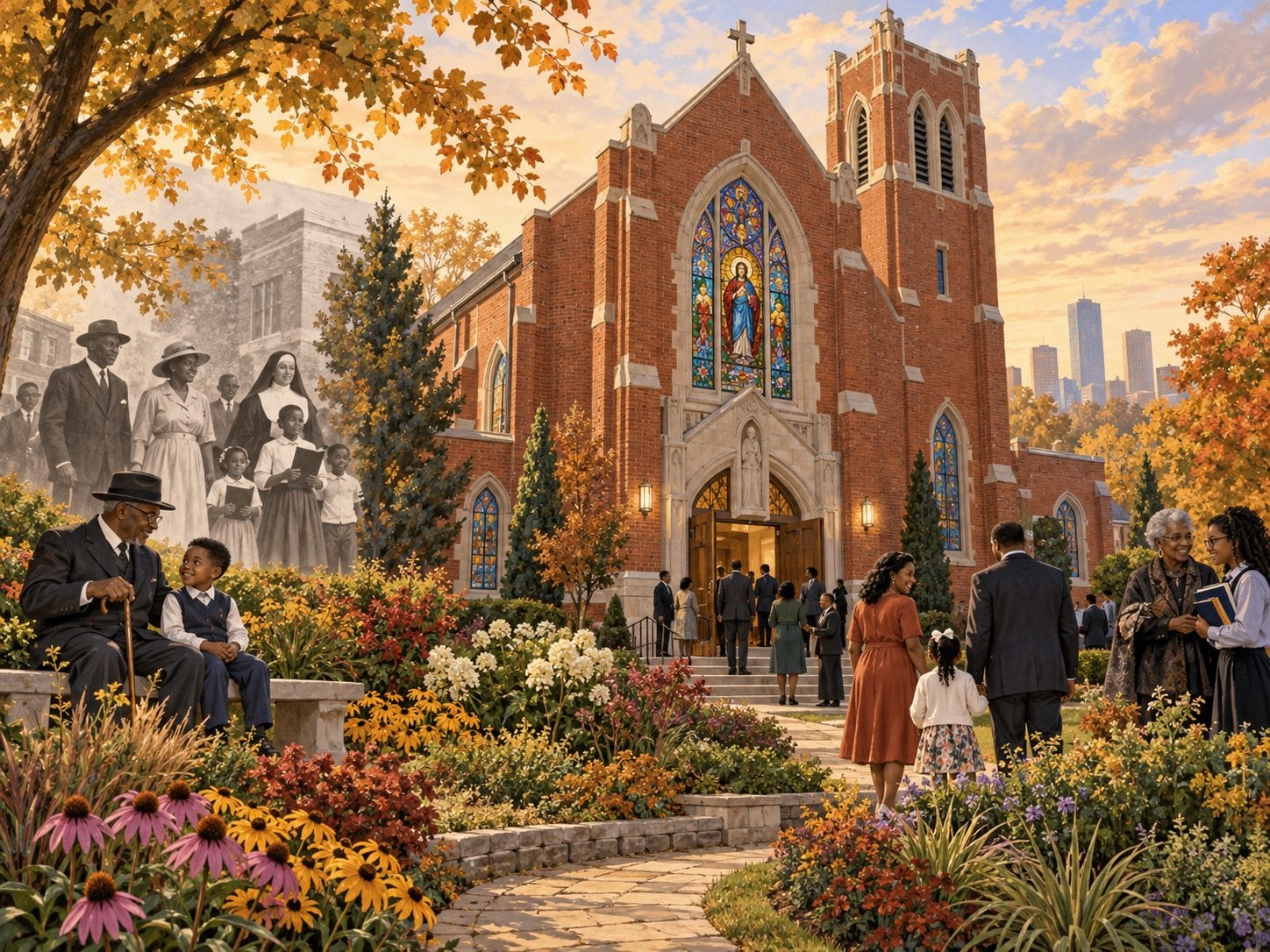
Now another addition is part of the story. The parish is marking its centennial with an October 17 banquet and an October 18 Mass, followed by the planned blessing and dedication of a Centennial Garden. KTUL's October 12 report says Bishop David Konderla will celebrate the Sunday Mass. The diocese also lists the October 17–18 observances on its events calendar.
A garden is not a substitute for a century of lived history. It cannot hold every family, service, loss, celebration or school-day memory. But its planned dedication offers a new point of gathering at a place whose earliest years were shaped by the question of where a community could gather at all.
A century after a small mission society began meeting and making plans, St. Monica is preparing to celebrate not just the endurance of a building, but the people who kept finding ways to make that community possible. In north Tulsa, even the newest part of the grounds belongs to a much older story. |
0 Comments
Join the conversation
Be the first to comment
Share your thoughts above.