
A Tulsa Teenager Spoke Up. Someone Listened. Look What Happened. |
One simple question about missing trees reached a city official willing to listen. Fifty years later, Tulsa is still enjoying the results. |
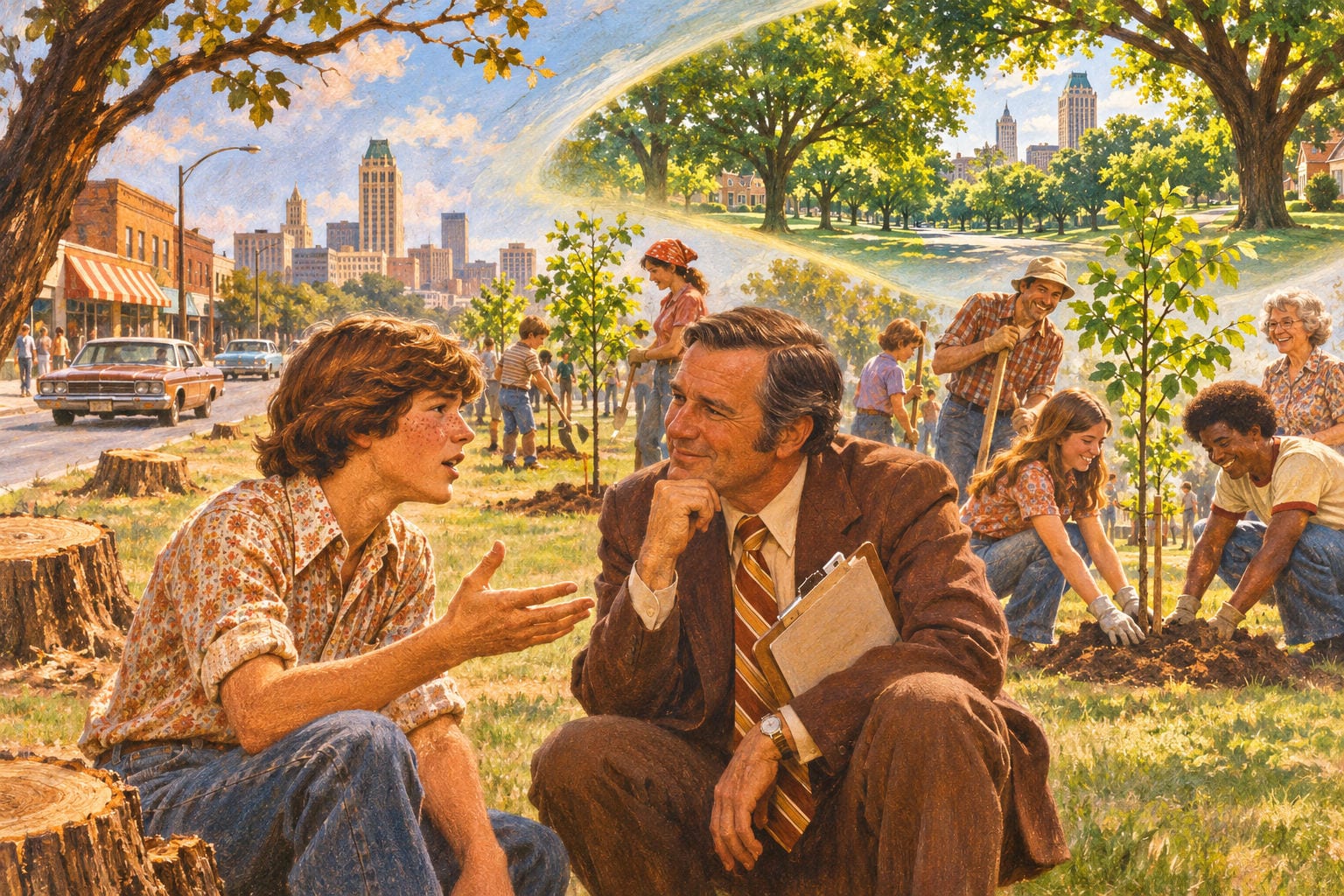
Mature oak trees were coming down along Tulsa's 51st Street as the road was widened in the mid-1970s. People complained about losing them. But a Thomas Edison High School student named Elliott Howe Jr. asked a question that looked beyond what was disappearing. He contacted Tulsa Street Commissioner Sid Patterson to find out what the city was going to plant in their place. It's a simple question. The remarkable part is that someone listened—and the answer didn't stop with a phone call.
Patterson was already hearing complaints about the trees. In a 2009 interview preserved by Voices of Oklahoma, he remembered the young caller because the question was different: not only why the oaks had to go, but what could replace them. The commissioner didn't have a ready solution. By his account, the city had no tree-planting program and little money to start one. It would have been easy for that to remain the end of the discussion. Instead, the question became part of what Tulsa residents and officials worked to answer.
That answer didn't appear out of thin air, and it wasn't one teenager acting alone. Patterson recalled that other residents were already discussing roadside beautification. But Howe's question helped put the missing trees into plain words. According to Up With Trees' history, Patterson brought together garden-club members, landscape architects and civic organizations to help create an effort that could seek community support where the city budget couldn't provide it. A young voice had found a listener; now more hands were joining in.
In 1976, the new effort made its first planting near the Broken Arrow Expressway's 31st Street exit, around 31st and Yale. Up With Trees' historical timeline says trees for the site were funded in honor of C. E. Natco's 50th anniversary. The detail feels almost too fitting: one anniversary helped put trees in the ground, and those first plantings would become the beginning of another organization's half-century Story. What had been a question about what Tulsa might do was becoming something people had actually done.
Then came the kind of small surprise that helps a community project grow. Patterson recalled that the Tulsa Rotary Club contributed $3,000 for trees. He expected that might buy about 30. A nursery offered trees at cost, he said, and the same money went toward 60 instead. Those were not necessarily the trees from the first 1976 planting. They were another example of the way the work multiplied: one group contributing funds, another making them go farther, more people turning good intentions into planted trees.
Of course, a tree isn't finished when the shovel is put away. There are years of tending, pruning and making sure it has a chance to grow. Up With Trees now describes work that includes planting and ongoing care, and it reports having planted tens of thousands of trees across the Tulsa area since 1976. That number is the organization's account of trees planted, not a verified count of how many survive today. The important thing for this Story is how many people have kept answering a question first asked long before some of today's volunteers were born.
There are new opportunities to take part this month. The nonprofit lists community plantings on November 21 and November 28, each scheduled to begin at 9:30 a.m. CST. It says volunteers receive a demonstration, then work in small groups with tools, gloves and guidance provided. Locations are shared with registrants the week before; volunteers 17 and younger need a guardian, and closed-toe shoes are required. Check the official listings for space and weather updates before making plans. No previous tree-planting experience is needed to appreciate what a few hours of help could mean.
There's a reason this history feels bigger than a planting schedule. Howe was a teenager. He wasn't the street commissioner, the person managing city funds or the one who could make trees appear along a highway. And the adults he reached did not have an instant answer. What mattered was the sequence that followed: a young person noticed what was missing, someone with public responsibility took the question seriously, and neighbors found ways to act. The documented Story doesn't need invented speeches or a claim that one person founded everything to be remarkable.
Fifty years later, Tulsa still has people willing to pick up that work. And perhaps the nicest part of the Story isn't only the trees. It's the possibility that the next useful idea for this city could come from another young person speaking plainly—and another adult caring enough to listen. |
0 Comments
Join the conversation
Be the first to comment
Share your thoughts above.